No. 09 · Polar ship, barquentine with steam
Endurance
Lost 21 November 1915 · Weddell Sea · 3,008 m
Shackleton's ship was crushed by Antarctic ice in 1915; every one of her crew survived, and she was found almost intact three kilometres down in 2022.
- Flag
- United Kingdom (Imperial Trans-Antarctic Expedition)
- Built
- Framnæs, Sandefjord, Norway, 1912
- Length
- 44 m
- Aboard
- 28 men
- Lives lost
- none
- Survived
- all 28
- Position
- 68°44.4′ S, 52°19.8′ W
- Lies at
- 3,008 m, mud
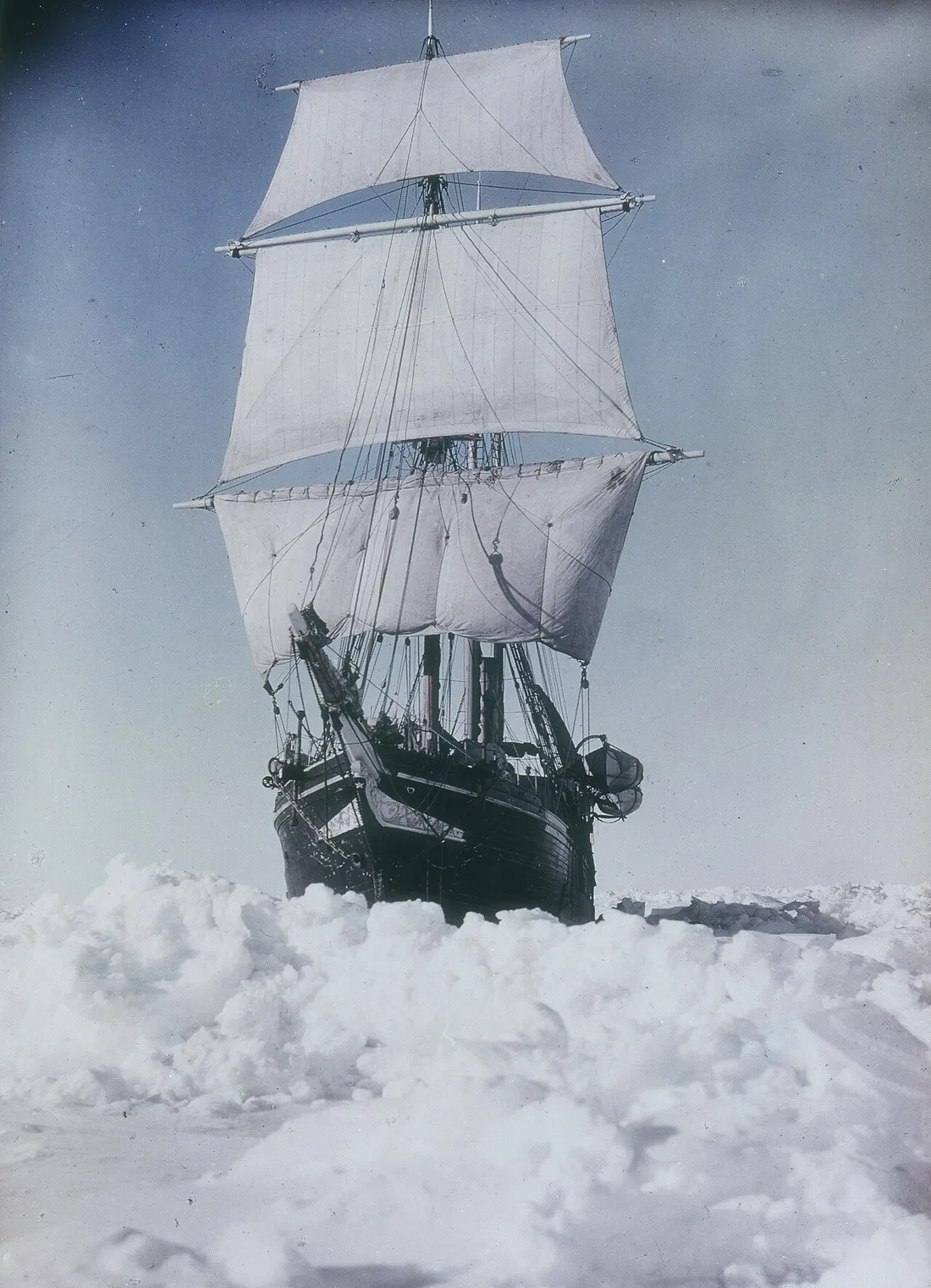
Ernest Shackleton meant to land a party on Antarctica and cross the continent on foot. His ship never reached the coast. This is the one wreck in the atlas where everyone came home.
Cause. Held in the Weddell Sea pack for ten months, she was crushed by the pressure of the ice and sank after the crew had moved onto the floe.
Plate · elevation, starboard side
The ship
Load waterline
Elevation, starboard side
The last hours
Ship drawn to scale; the water below is not.
-
5 December 1914
From South Georgia
The Imperial Trans-Antarctic Expedition sailed for the Weddell Sea.
-
18–19 January 1915
Frozen in
Within about a day's sail of the coast she was caught in the pack ice and could not break free. She drifted with the ice through the polar winter.
-
October 1915
The ice presses in
As spring came, the moving ice squeezed the hull, twisted her stern and opened leaks the pumps could not hold.
-
27 October 1915
Abandon ship
Shackleton ordered everyone onto the ice with the boats, stores and dogs. They made camp on the floe nearby.
-
21 November 1915
She goes
The crushed ship slipped under the ice stern first while the men watched from their camp. Captain Frank Worsley recorded her position.
-
April–August 1916
Every man saved
The crew reached Elephant Island in three boats. Shackleton sailed on for help to South Georgia, and all 28 men were rescued, the last on 30 August 1916.
Below about 200 m almost all sunlight is gone. This is where the twilight zone begins.
Below 1,000 m no sunlight reaches at all: the midnight zone. The only light is made by living things.
At 3,008 m the pressure is about 302 times what it is at the surface.
- The wheel, still standing
- Foremast, fallen over the bow
- Mainmast, broken
- Name on the stern: ENDURANCE
Elevation, starboard side, as found.M mud · 3,008 m
As found
Where she lies
She sits upright and largely intact, her name still clear across the stern and her wheel standing. There are no wood-eating shipworms in these waters. Some masts and rigging have fallen and her bow shows damage from the ice. She lay roughly four nautical miles from Worsley's recorded position.
Found
Found on 5 March 2022 by the Endurance22 expedition of the Falklands Maritime Heritage Trust, using underwater robots launched from the icebreaker S.A. Agulhas II.
Today
A Protected Historic Site and Monument under the Antarctic Treaty: she may be filmed and surveyed but not touched.